
Home / Spatial Finance Initiative / GeoAsset Project / Petrochemicals
Petrochemical Production Databases
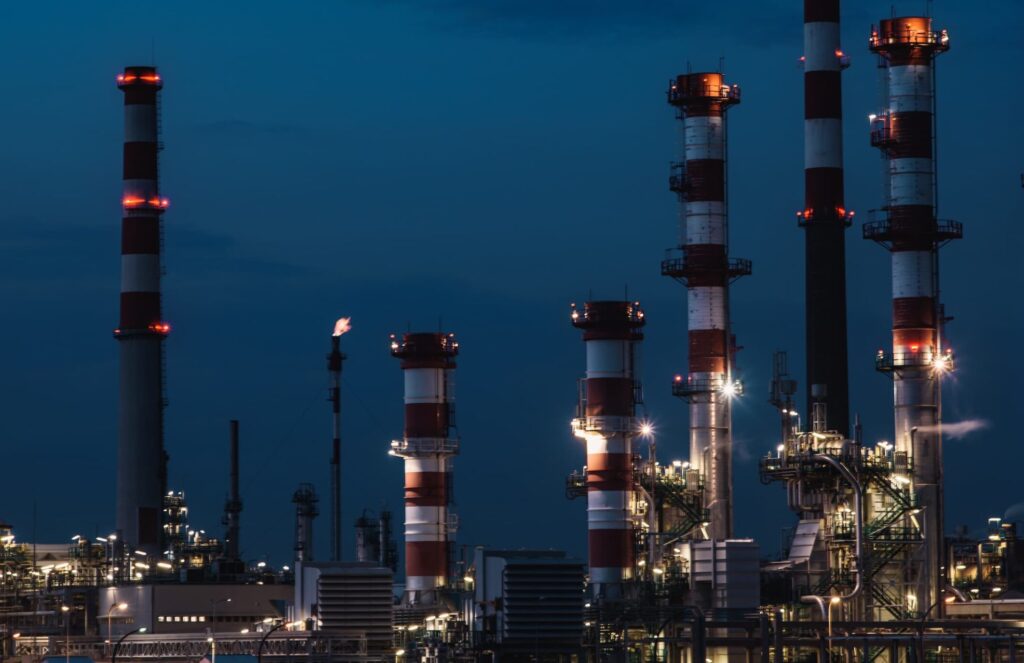
Chemicals production, including petrochemicals and petroleum refining, is responsible for approximately 5.8%* of global greenhouse gas emissions. The sector has significant environmental impacts beyond carbon, including substantial energy requirements, fossil fuel inputs and the toxic/waste impacts of some of its final products such as plastics.
*Ritchie, H., & Roser, M. (2017). CO₂ and greenhouse gas emissions. Our world in data.
The Spatial Finance Initiative Global Ethylene Production Database provides information on both operating and announced ethylene producing facilities around the world. The database contains 342 facilities with information about location, operating status, capacity, plant type, start year, feedstock, expansion project costs and ownership where available.
This information was manually collected, validated and enriched by combining information from various corporate and country specific web and map sources. This is our second version of a global database for the ethylene petrochemicals sector. Please inform us about any errors, omissions or other feedback through the contact form below.
The Spatial Finance Initiative Global Ethylene Production Database can be used by others and is available under a CC BY 4.0 license. The suggested citation is: Kampmann, D., Christiaen, C., Singh, A., Kushwaha, N., Jalihal, S., & Caldecott, B. (2025). Spatial Finance Initiative – Global Ethylene Production Database (December 2025) [Data set]. Zenodo. https://doi.org/10.5281/zenodo.17866398
Additionally, information about global petrochemical production facilities for other petrochemicals is available through the Global Chemicals Inventory hosted by Global Energy Monitor and developed in collaboration with the Spatial Finance Initiative. The inventory provides information on global production of eight “building block” chemicals: ethylene, propylene, and butadiene (“olefins”); benzene, toluene, and xylene (“aromatics”); ammonia; and methanol. It includes plant-level data on location, ownership, primary and secondary chemical products, and feedstocks.